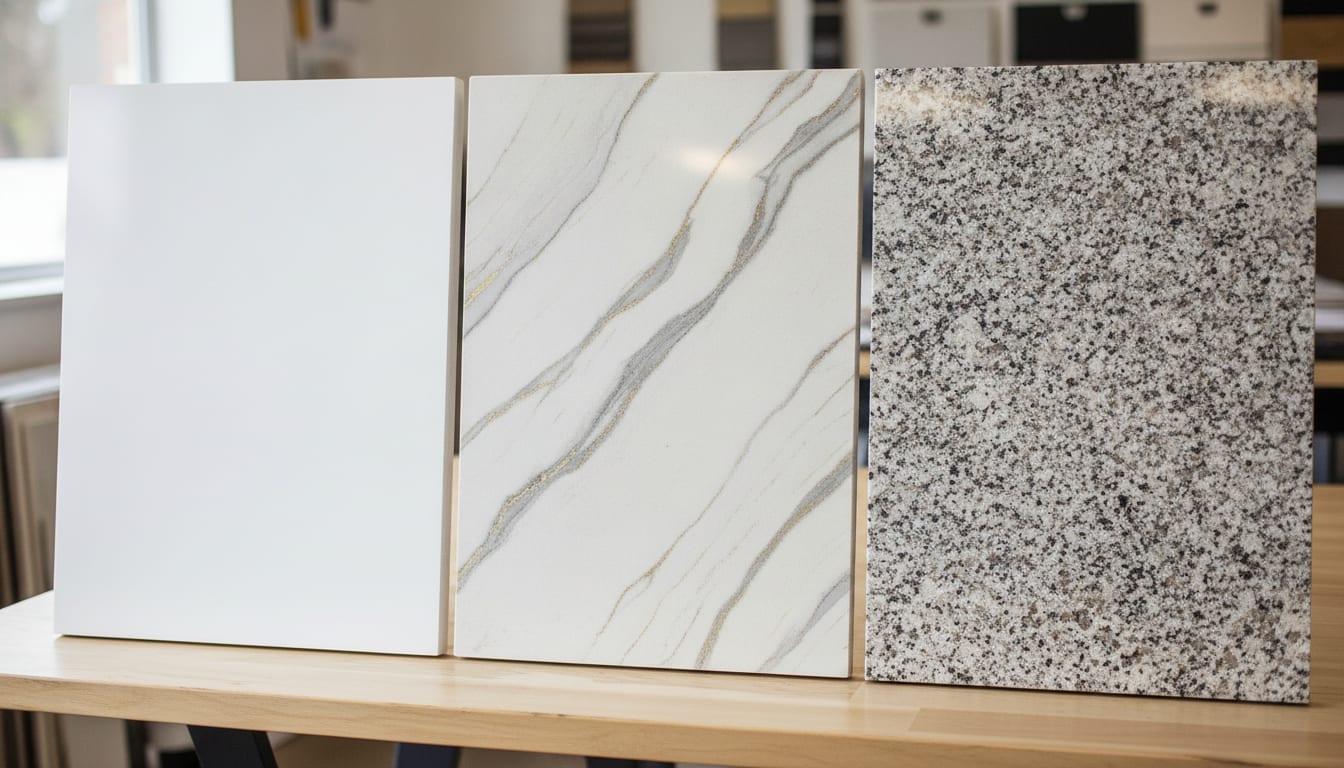
Countertops take more daily abuse than almost any other surface in your home, especially in a busy Central Texas kitchen where sun, heat and constant use are part of life. If you're weighing quartz vs quartzite countertops, or wondering how granite fits in, the differences come down to how each material is made, how it performs over time, and the look you want in your space.
What Each Material Actually Is
Granite and quartzite are both natural stone, cut from the earth and polished. Granite is an igneous rock with a mix of minerals that gives it its classic speckled look. Quartzite starts as sandstone and is transformed by heat and pressure into a dense, hard stone, often with a softer, more marble-like veining.
Quartz countertops are different. They're engineered, made from crushed quartz mixed with resins and pigments. That manufacturing process is why quartz comes in such a consistent range of colors and patterns, including looks that mimic marble almost perfectly.
Durability in a Central Texas Kitchen
Austin summers bring long stretches of heat, and many kitchens see direct sun through windows or skylights for part of the day. Natural stone like granite and quartzite handles heat well and generally resists scorching from hot pans. Quartz is heat resistant too, but because it contains resin, manufacturers typically recommend using a trivet rather than setting a hot pan directly on the surface.
Quartzite is prized for being one of the hardest countertop materials available, which makes it a strong choice for a busy family kitchen with a lot of chopping, rolling and daily wear. Granite is also hard and durable, though it can be more prone to etching from acidic foods than quartzite depending on the specific stone.
Quartz holds up very well against scratches and stains because of its engineered, non-porous surface. It doesn't need sealing, which is a real advantage for homeowners who want one less maintenance task on the list.
Maintenance and Sealing
Granite and quartzite are porous natural stones, so they generally need periodic sealing to resist stains from oil, wine or coffee. How often depends on the specific stone and how it's used, which is something your designer can walk through once a material is chosen.
Quartz skips the sealing step entirely. For a household that wants a low-maintenance surface, especially in a kitchen that sees a lot of cooking and entertaining, that's often a deciding factor.
Look and Design Flexibility
If you love the idea of a one-of-a-kind slab with natural movement and no two pieces exactly alike, granite or quartzite delivers that. Many Austin homeowners updating an older bungalow or ranch home lean toward quartzite for a bright, marble-inspired look with better everyday durability than true marble.
Quartz offers more predictability. If you're matching a large island to perimeter counters, or you want a specific color and veining pattern for a cohesive design throughout an open kitchen, engineered quartz makes that easier to control.
Cost Considerations
Quartz, quartzite and granite all vary in cost depending on the specific slab, thickness, edge profile and how much fabrication and installation the layout requires. Rather than guess at numbers that may not apply to your kitchen, it's worth knowing that the size of your countertops, the complexity of the layout and the finishes you choose all factor into the final cost. A free consultation is the best way to get a real answer for your specific kitchen.
Bringing It Together in Your Kitchen
Countertops rarely get chosen in isolation. Cabinet color, backsplash tile, lighting and even your island layout all play off the stone or quartz you select. That's part of why design and construction working together, under one roof, makes a difference: your designer can help you see samples side by side and understand how a material will actually look and perform in your specific space, not just in a showroom.
At the Lifestyle Designs & Remodeling design studio in downtown Austin, you can put your hands on more than 200 wood stains, four cabinet displays, and a full range of tile, countertop, flooring and wallpaper samples, alongside a kitchenette for a real sense of scale. It's a useful way to compare quartz, quartzite and granite side by side before committing.
Ready to Compare Your Options in Person?
Whether you're planning a full kitchen renovation or just starting to think through countertop options, a free consultation with Lifestyle Designs & Remodeling is a relaxed way to see and feel the materials for yourself. We work with homeowners throughout Austin and surrounding communities including Round Rock, Cedar Park, Georgetown, Dripping Springs and beyond. Call (737) 320-4321 or use the chat at buildwithustx.com to set up a visit, either at your home or at the design studio just east of downtown.
Frequently Asked Questions
Which is more durable, quartz or quartzite?
Quartzite is one of the hardest natural stones available and resists scratching well, while quartz resists scratches and stains thanks to its engineered, non-porous surface. Both perform well in a busy kitchen; the right choice depends on your maintenance preferences and the look you want.
Do quartz countertops need to be sealed?
No. Quartz is engineered and non-porous, so it doesn't require sealing the way natural stone does. Granite and quartzite typically need periodic sealing to resist stains.
Can I see quartz, quartzite and granite samples before deciding?
Yes. The Lifestyle Designs & Remodeling design studio in downtown Austin has countertop, tile, flooring and wallpaper samples you can see and touch in person, alongside cabinet displays and wood stain options. A free consultation is a great way to start comparing.