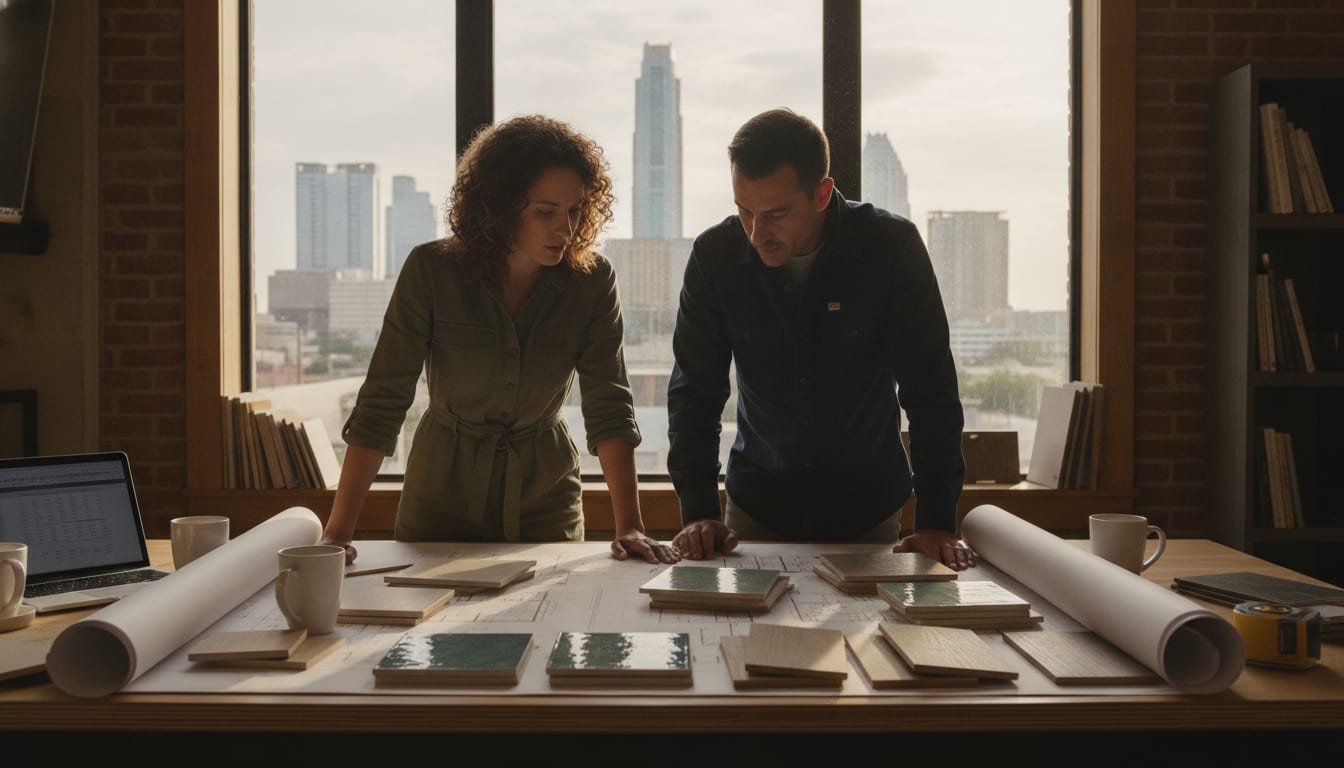
If you're planning a kitchen remodel, primary bathroom overhaul, addition or custom home in the Austin area, one of the first decisions you'll make isn't about tile or countertops. It's about who you hire, and how. Do you bring in a designer and a general contractor separately, or choose a design-build team that handles both under one roof? Here's how the two approaches actually differ, and what each one means for your project.
What "Design-Build" Actually Means
Design-build means one team handles both the design and the construction of your project. You work with a dedicated designer and a project manager from start to finish, so your vision moves from sketch to selections to construction without getting handed off between separate companies. The same team that draws the plans is accountable for building them.
What the Separate Route Looks Like
The traditional path splits the work into two relationships. First, you hire an architect or interior designer to develop plans and selections. Once those are finished, you take them out to bid, interview general contractors, and hire one to build what was designed. Each party has its own contract, own schedule and own communication style. When something doesn't translate cleanly from drawing to framing, you're often the one relaying messages between the two.
This can work well for homeowners who already have a strong design vision, want to interview multiple contractors for price comparison, or have a smaller, well-defined project where coordination is simple. It gives you more control over choosing each party independently.
Where Design-Build Tends to Help
One Point of Accountability
With design-build, there's no finger-pointing between "that's a design issue" and "that's a construction issue." The same team is responsible for both, which tends to mean fewer surprises when plans meet reality, especially in older Austin homes where a wall opens up and reveals something the original drawings didn't anticipate.
Design Decisions Informed by Buildability
A designer working alongside a project manager from day one can weigh in on what's realistic to build, what affects cost, and what Central Texas conditions (expansive clay soils, summer heat, occasional hard freezes) might mean for materials and systems. That kind of back-and-forth is harder to get when design and construction are handled by two separate companies working from a finished set of plans.
Fewer Handoffs, More Continuity
Your designer and project manager stay with you through the whole project. You're not re-explaining your goals to a new team once construction starts. For a whole-home remodel, addition or custom build, where decisions ripple across months, that continuity matters.
Questions to Ask Either Way
Whichever route you're considering, it helps to ask:
- Who is my single point of contact once construction begins?
- How are design changes handled once building starts?
- How will permitting and city requirements be confirmed for my specific project?
- What does the selection process look like - is there a place to see materials in person?
On permitting specifically: requirements vary by project, jurisdiction and scope. A good design-build or design team should confirm exactly what's needed with the city as part of your project, rather than guessing upfront.
Seeing and Touching Your Options
Whether you're adding an ADU in the backyard, reworking a primary bathroom, or planning a custom home, it helps to see materials in person rather than guessing from a screen. A design studio with wood stains, cabinet displays, tile, countertop, flooring and wallpaper samples lets you compare finishes side by side before anything is ordered.
Which Fits Your Project?
If you're weighing design-build vs. general contractor for an Austin remodel, think about how much coordination you want to manage yourself. A kitchen remodel, primary bathroom renovation, whole-home addition or new custom home all involve a lot of moving pieces - layout, cabinetry, lighting, fixtures, millwork, finishes. Design-build is built around keeping those pieces connected under one roof, with a dedicated designer and project manager guiding you through it.
There's no single right answer for every homeowner or every project. But understanding the difference before you start interviewing anyone puts you in a much stronger position.
Frequently Asked Questions
Is design-build more expensive than hiring separately?
Cost depends on the size, design and finishes of your specific project, not on which approach you choose. The best way to get a real number is a free consultation, where the team can understand your goals before discussing cost.
Do I lose control over design decisions with a design-build team?
No - you still work closely with your dedicated designer on layout, materials and finishes. The difference is that the same team is also responsible for building it, so your design input stays connected to the construction process from start to finish.
Is design-build a good fit for a custom home or ADU, or only remodels?
Design-build works well for custom homes and ADUs too, especially when there's no existing structure to react to yet. In those cases, starting at a design studio to explore materials and layout options can be a helpful first step.